
(Sign at Cleveland Lakefront Nature Preserve)
This was an autumn that changed dramatically from an
unsettlingly wonderful extended period of temperatures in the 70s and even 80s
to a dramatic 35-degree plunge to the low 40s. Earlier in October, the
nighttime low temperatures had been absolutely balmy and the remaining crickets
sang as if it were August. Then the abrupt arrival of unseasonably cold temperatures
was accompanied by rain and more rain.
Singing insect season didn’t gradually diminish. It
was a sharp cutoff. On those rare occasions when the sun appeared and
temperatures climbed briefly into the 50s, a few survivors attempted to resume
singing. Their songs, now softer, were delivered from lower locations in thicker
vegetation by wary and tentative individuals. Instead of moderating,
the cold, wet weather intensified and the last crickets were silenced.
The finality was too difficult to accept, as usual.
Were there any crickets singing anywhere?


What about near the lake – as in right at the
lakeshore? The Lake Erie water temperature off Cleveland was 54-55, so the
lakeshore areas hadn’t gotten quite as cold. The warmest area in the region
should be the lakeshore in the city because of urban heating.


If so, then perhaps Cleveland Lakefront Nature Preserve would be the place to look and listen for survivors. I’d read about the habitat improvements underway at this urban lakeshore preserve – especially the meadow area - and I knw that it's typically filled with migrating birds in spring and fall. Yet I’d only visited a few times because one of my goals is to get away from human noise, not immerse myself in it.
I invite and encourage you to read more about this
88-acre preserve’s origins as a confined
disposal facility for polluted material that was dredged from the Cuyahoga River and couldn’t be dumped directly
into Lake Erie itself. The site was commonly referred to as “Dike 14” (short
for “diked disposal facility site number 14.”) Please see Dike 14: From Sunken Barges to Nature Preserve by Jim Lanese at Cleveland Historical.org, and keep
in mind that the vegetation, birds, and insects now present moved in on their
own once disposal ended in 1999.


When I pulled into the parking area on November 5th,
I was astonished. Allard’s Ground Crickets – a multitude of them – were singing nonstop
in the grass near the cars! What a
gorgeous, sparkling chorus! Elderly grasshoppers hopped laboriously on the path, an ancient Slender Meadow Katydid tried to hide in the taller grasses, but the Allard's Ground crickets sounded as youthful and enthusiastic as if it were late July.
The truth of the season was in the calls of the Golden-crowned Kinglets in the evergreens overhead, but the grasses hosted the last songs of summer.
I tried to record the ground cricket chorus, but the
adjacent freeway’s urban uproar was
prohibitive. The preserve is next to heavily-traveled I-90, (which we call the
Shoreway here in Cleveland) and its din
obscures all other sounds except the jets flying into Burke Lakefront Airport
just west of the preserve.


Although the Allard’s chorus was quite enthusiastic, I knew their concert would abruptly end in just a few days. Within less than 10 minutes, I caught four of them - just a small sample of all the crickets singing in the grass – so they would continue singing in a warm house.
This initial discovery was exciting, but it quickly became essential for me to relocate out toward the lake and away from the relentless traffic.
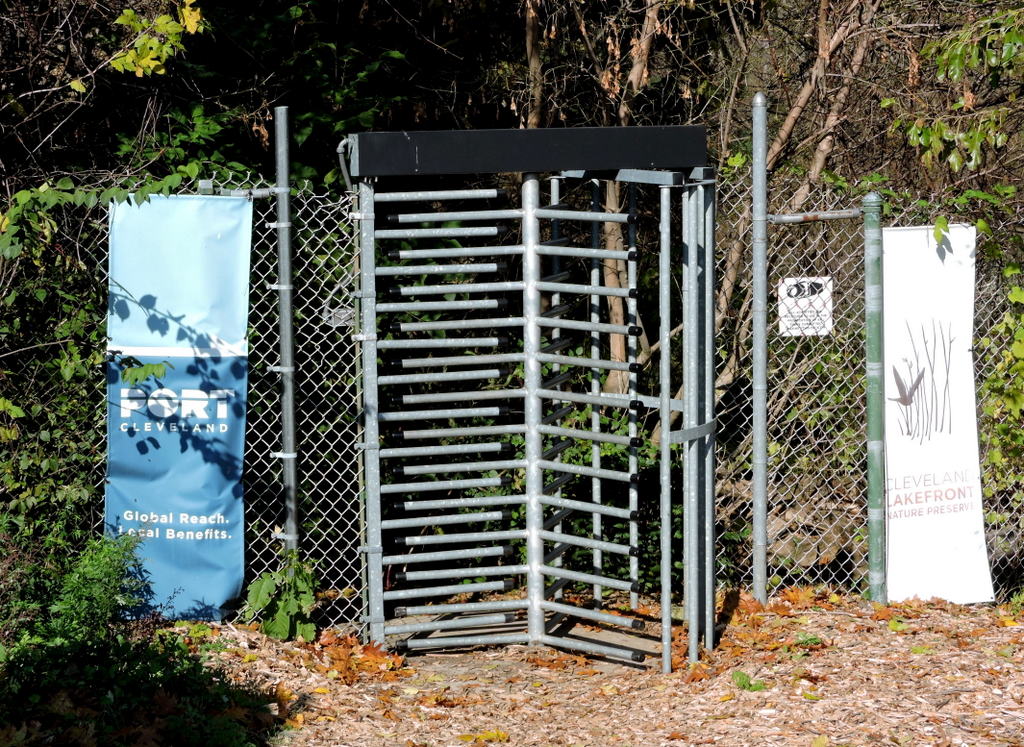
I headed to the gate and began walking toward the meadow area. Mowed paths were lined with goldenrod standing tall with silvery seed heads held high.

Then from the back of the goldenrod I heard…a Four-spotted Tree Cricket! How did his species arrive at this former landfill, and why
was he still alive and singing after that prolonged, miserable weather?
He definitely wouldn’t be alive for more than a
couple more days. I searched until I
found him and gently plucked his leafy concert stage into a container so he could continue singing in a warm house.
I subsequently heard one additional - and very
intriguing - Four-spotted song farther up the path. It sounded as if his
“voice” cracked and broke between two different pitches. How was this possible? Surely age and damage to the file teeth of his
file-and-scraper instrument was the cause, but I had no way of examining him.
In fact, I couldn’t find him at all. I certainly
tried, but I was at the preserve during a break between teaching my morning
classes and an important meeting in the afternoon. I couldn’t return to school
with my hair adorned with goldenrod seeds and my clothes looking like a seed
bank.
But I was able to get a recording of what I heard,
and if you look at the sonogram you can
see as well as hear the two different pitches.


As I approached the meadow, I was delighted to see
tall stands of native grasses. Did Sword-bearing and Round-tipped Coneheads
sing here earlier in the season? I decided immediately that I would need to
return next year and learn more about which crickets and katydids were somehow
finding and establishing themselves in this urban insect oasis.


My most significant surprise occurred along a rutted path
a little farther to the west. This is what I saw, and at first, I just heard traffic.

But look closely at the sonogram as you listen...

Do you see that pale orange line far above the thick, fuzzy band of color that is traffic noise?

But look closely at the sonogram as you listen...

Do you see that pale orange line far above the thick, fuzzy band of color that is traffic noise?
As I brought my microphone closer to what had caught my attention, this is who I heard:

Cuban Ground Crickets!
Since discovering that this supposedly southern species
is common in every county in NE Ohio, I’ve been curious about whether they're present in more urban areas. I hadn’t found them in the city or the inner-ring
suburbs, but here they were in a former river-dredging landfill!
They’re only ¼” in size. They jump very well, but
they don’t fly. How could they have possibly gotten to this area?
For that matter, how are any of these singing
insects reaching this spot? A few years ago I found a Black-legged Meadow
Katydid in a stand of phragmites there, and a single Forbes’s Tree Cricket had announced
his presence in the goldenrod. I was puzzled and curious, but did not pursue that particular wondering. Maybe it's time I did.
 Black-legged Meadow Katydid in phragmites at CLNP on 9-14-15

You may be wondering how my new house guests are doing.

The Allard’s Ground Crickets’ winter homes are plastic insect carriers with a base layer of sand, clumps of grass, and some small twigs and leaves. They like sandy soil, after all, and they appreciate having places to hide.

They are a lively bunch when they’re warm, and they’re quite capable of hopping right out of their plastic carriers and onto the dining room table when I change their lettuce, grape and apple slices each evening.

If I’m not fast enough, they can quickly travel across the dining room floor or perch on one of the chairs. Fortunately, I've caught any adventurous ones before they got too far.

The Allard’s Ground Crickets’ winter homes are plastic insect carriers with a base layer of sand, clumps of grass, and some small twigs and leaves. They like sandy soil, after all, and they appreciate having places to hide.

They are a lively bunch when they’re warm, and they’re quite capable of hopping right out of their plastic carriers and onto the dining room table when I change their lettuce, grape and apple slices each evening.

If I’m not fast enough, they can quickly travel across the dining room floor or perch on one of the chairs. Fortunately, I've caught any adventurous ones before they got too far.
The Cuban Ground Cricket seems quite pleased with
his carrier as well.

Everyone comes upstairs to the bedroom at night to enjoy the warmth of the space heater, returning to the dining room table near the south windows during the day and my little studio in the evening. When they're warm, they sing: light, separated, sparkling songs from the Allard's Ground Crickets and longer, smooth, silvery songs from the Cuban Ground Cricket.

Dmitri the cat spends hours with them, as he does with our late-season crickets every year. Even when I can't spot them in their little apartments, he always knows exactly where they are.


Everyone comes upstairs to the bedroom at night to enjoy the warmth of the space heater, returning to the dining room table near the south windows during the day and my little studio in the evening. When they're warm, they sing: light, separated, sparkling songs from the Allard's Ground Crickets and longer, smooth, silvery songs from the Cuban Ground Cricket.

Dmitri the cat spends hours with them, as he does with our late-season crickets every year. Even when I can't spot them in their little apartments, he always knows exactly where they are.

And the Four-spotted Tree Cricket? He enjoys eating the apple pieces I provide in his leafy terrarium. I try to choose a variety of stems and leaves that seem like appropriate singing perches, and I move him up to the bedroom by the space heater at night.

He is quite old, but when all the house lights are off and conditions suit him, he still sings. It’s the song of an elderly individual, but I am so appreciative. And when I woke up on the morning of my mid-November birthday, I stayed in bed an extra ten minutes just to listen to his solo. He continued to sing while I quietly slipped downstairs for my recording equipment so I could share his song with you.


He is quite old, but when all the house lights are off and conditions suit him, he still sings. It’s the song of an elderly individual, but I am so appreciative. And when I woke up on the morning of my mid-November birthday, I stayed in bed an extra ten minutes just to listen to his solo. He continued to sing while I quietly slipped downstairs for my recording equipment so I could share his song with you.


