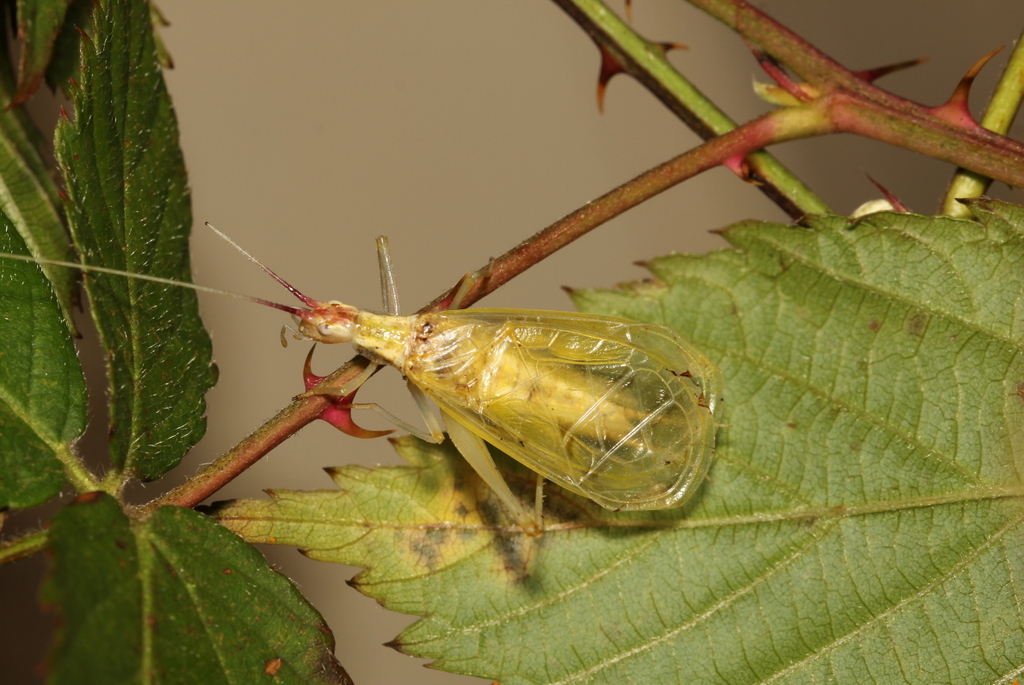
I'm beginning to think that "Crickets in the House" may become an annual post at the end of each singing insect season. For those of you who have expressed interest in the terrariums and their residents in previous years, this post is especially for you.
I’ve become increasingly accustomed to warmer Novembers with singing tree crickets, ground crickets, and occasional katydids through much of the month. I now expect a gradual decrescendo of insect song during the course of the month up near Lake Erie where the warmer lake temperature modifies the effect of advancing artic air.
Not this year. A hard freeze earlier than we’ve recently experienced completely silenced the outdoor concert by mid-November. Fortunately, I’d already begun bringing crickets home.
When the first arctic cold front approached, I gathered up anyone I could catch. I could see lightning from cold-front-generated thunderstorms out over Lake Erie as I snatched my last Forbes’s Tree Cricket and the goldenrod on which he was singing.
A brief warmup followed. A few tree crickets and many ground crickets made it known that they had survived. Some species are pretty hardy and can get through a couple nights of frost, and that was true this year.
But the next cold front - the insect-killer – would be the final act for all of them. When this frigid air mass had almost reached Cleveland, I was on my hands and knees out in the back yard with my flashlight searching for our resident Carolina Ground Crickets. High temperatures were predicted to be in the upper 20s to lower 30s and lows were in the mid to upper teens in my region. No one was going to survive this cold front.
It was pretty crowded in the house.
There were two Broad-winged Tree Crickets, both Black-horned and Forbes’s Tree Crickets (who will be the subject of their own post), a Four-spotted Tree Cricket, and a Jumping Bush Cricket. The ensemble I called “the little ones” was made up of two Handsome Trigs, a Cuban Ground Cricket, an Allard’s Ground Cricket, a Striped Ground Cricket, and the three Carolina Ground Crickets I'd rescued at the last possible minute from the backyard.
Carolinas seem to do quite well in the house and I enjoy them very much. I seldom see these common, yet elusive crickets because even indoors, they live under leaves, between rocks - anywhere they can be invisible and inaccessible. Here's one of them getting started on his evening of songs:
In previous years, I’ve used glass terrariums with screen lids that had ample soil and cricket-friendly plants like grass, little asters, violets – basically whatever is hand in the yard and easy to dig up. The combination of soil, small plants appropriate to their natural habitats, some dead leaves and small pieces of wood, bark, or a little rock to sit on and hide under provides an opportunity to watch behavior that’s difficult to observe in the wild.
(Dmitri and the terrariums, October 2015.
The stones at the corners kept the lids securely in place)
I’ve seen crickets sit up on leaves and twigs in the sun, females ovipositing in the soil, and tiny nymphs growing up the following year. I've also learned about where and how they so successfully conceal themselves.
However, other creatures live in that soil and hide out on the plants as well. Spiderlings from a hatch-out somewhere in the kitchen will slip through the screen and mature in a terrarium, remaining undetected until a bit of a web (or an unfortunate prey item) reveals their presence. These are not orb weavers with stunningly beautiful webs. No, they’re much sneakier common house spiders (Parasteatoda tepidariorum). It is most disheartening to find a tree cricket or even a ground cricket strung up on a line of web.
There were also tiny white dots in one of the larger terrariums that hatched into an entire civilization of ants which traveled in and out from the terrarium to the far reaches of the kitchen. I eventually had to relocate all the soil out to the back yard, trying to keep the ant family unit intact as best I could.
Crane flies would occasionally hatch out, much to the cats’ delight, and the best surprise was a lightning bug/firefly (they are really beetles) that emerged as an adult in February and flashed every night for a month. Lightning bug larvae eat slugs, which were always in residence and forever feasting on the crickets’ lettuce.
The spiders were my main concern, however. I decided to try to control the ground level a little more since this is an area where they would retreat to hide. Perhaps sand from the lakeshore areas instead of our heavy clay soil would be less hospitable to the spiders and might also help eliminate the layers of algae that always seemed to accumulate on the glass walls.
The crickets who were at home in sandy soil were fine with the change. Those that were not probably missed having a basement level filled with little holes and channels in which they could conceal themselves. The plants generally did not appreciate the dryness, and after a year of mixing humus back into the sand I decided to just try dried leaves and grasses.
I switched to plastic cricket carriers, added an inch of sand to the bottom, and covered it with dead leaves along with their usual tiny food dishes and pieces of lettuce and apple. Just to be safe, I covered the lids with fine mesh fabric to deter the house spiders if the carriers were near the sunny south windows where spiders are more common.

The resident Striped Gound Cricket is not much to look at, I suppose, since he was already a little battered and worn down when I caught him.
He sings every day, though, and you'd never know from listening that he's such an old guy. I've included a sonogram excerpt so you can see both the steady rhythm with which he sings and how each individual song is a quick series of wing strokes. (By the way, that's a Jumping Bush Cricket up on the second floor that also can be heard in the recordings.)
I add lettuce and a tiny slice of apple along with dry cricket food and water cubes to the singing cages and cricket carriers every evening, and they’re set. Replacing the heavy glass terrariums and screen lids with plastic carriers did make them easier to move and care for. (They like this little radiator space heater and sing much more when I turn it on.)

The Handsome Trigs and the tiny Cuban Ground Cricket can escape virtually any enclosure - even the miniscule opening where the handle of an insect carrier attaches to the lid. Only my beloved mesh singing insect cages, cherished presents from Wil and Donna Hershberger, keep these insects safe. They have lettuce, a tiny piece of apple, the smallest dishes of cricket food and water cubes (caps from one of the cat’s pill bottles), and a bit of blackberry leaf in season each evening.
Even a few small, dead leaves in the bottom of the little singing cages will please the Handsome Trigs, and they appreciate having a curled-up dead leaf in which to sing. This seems to be a preferred concert venue, which is one reason that singing males are so difficult to locate
Here's a recording of trig in the photos above singing his crackling, sparkling song. You'll see that there are little spaces between the wing strokes; it's those spaces that separate the texture of his song from those of our other trigs. He's also astonishingly loud for such a tiny individual! (Maybe you'll be able to hear Tatyana purring softly on the E below middle C as well.)
It's the tree crickets who typically are the challenge. They don’t live on the ground – they live in plants. I do my best to replicate the habitat in which they were singing when I found them, but there are challenges. Appropriate vegetation grows in soil, along with all the other life forms – including cricket predators – that are found there. I needed leaves: leaves to hide in, leaves to sing from, leaves that possibly might even be a preferred food.
Blackberry leaves.
I use small, empty plastic pill bottles as little vases for the end growth of blackberry canes. The leaves last for at least a few days in the water, and I cover the bottle opening with a folded, dry blackberry leaf to prevent anyone from falling in and being unable to escape (this had not happened, but I was trying to think of potential tragedies to avert.) When I’ve had a couple inches or more of soil, I've used stem holders stuck into the ground. I'm still experimenting with the new configuration.
I also mist the leaves –including the leaf litter in the ground crickets’ carriers - every day. I’m careful not to get any water on the dry cricket food because it molds. I also don’t spray the crickets directly because they get very indigent about it. Broad-wingeds scuttle under a leaf. Ground Crickets dash for cover. One of the Forbes’s Tree Crickets would jump right up at me as if he were going to take me on. The Allard’s Ground Cricket, too, would pop straight up in the air almost to the top of his carrier. They all said, “Just NO!”
I included thick twigs beween blackberry stems for the Jumping Bush Cricket because this species travels along twigs and branches. Slender twigs also function as stakes for apple pieces in tree cricket carriers. There are goldenrod and aster flowers earlier in the fall and seed heads later that are much appreciated by Forbes's, Black-horned, and Four-spotted Tree Crickets. Because they do occasionally go down to the “ground level” of the carriers, I added some leaves, bits of flowers and seed heads, cricket food, and water cubes if anyone wanted them.
This has been very successful – they sing and sing from the blackberry leaves. I’ve seen one of the Broad-winged Tree Crickets eating the leaves. I think the others do as well, because I never see them eating the lettuce I place up there. The Broad-winged Tree Crickets hide on the undersides of the leaves. The Forbes’s and Black-horned Tree Crickets occasionally do this as well, but they also bask in the sun on the upper surfaces of the leaves during the day.
The Jumping Bush Cricket is right at home in blackberry as well.
Members of this species are intriquing and quite odd, and I've learned enough about them to give them yet another post of their own. For now, though, here's the Jumping Bush Cricket in the photo above singing up on the second floor of our bungalow. The "little ones" all come into the bedroom at night, but he's so loud that sleep would be impossible if he were to join them.
You'll notice in the sonogram that his song, like that of the Striped Ground Cricket, has a predicable rhythmic pulse. Also like the Striped, each chirp is actually a little cluster of wing strokes.
Unfortunately, obtaining blackberry became a challenge much earlier than usual this year. Not only did NE Ohio had that surprisingly cold spell in mid-November, there was also no snow to insulate and protect the meadow and woodland plants that still had leaves. Even along the lakeshore, where temperature don’t reach freezing until considerably later than inland areas, most of the blackberry leaves were scorched and desiccated. Normally, I’d head out into the NE Ohio snow belt counties, dig under the snow, and retrieve blackberry leaves that were still relatively green and soft. Not this year.
It’s December 13th now and tree crickets often seem to fade away after Thanksgiving. The few that have lived until late December, including the phenomenal Snowy Tree Cricket who survived in his blackberry until early February, were the exceptions.
The Broad-winged Tree Cricket in the opening photo sang so assertively for such extended periods of time that perhaps it's not surprising that the less ambitious Broad-winged outlasted him.
That elderly individual is still quietly hanging on the underside of his blackberry leaves though he hasn’t sung at all in the past several days. It almost seemed that once the overachiever passed on, this one didn't even try to bother. Maybe he's just old and decided to retire, but he's still welcome here.
Since motionless camouflage is his strategy, I can actually remove the sprig of blackberry on which he's hiding and place it on the kitchen table while I freshen up his house. He's on the back of a different leaf each evening, but the photos below document one of the only times I actually saw him change locations.
(You can see he's pretty old. This cricket had already lost
a back leg and part of an antenna when I found him)
The eccentric Jumping Bush Cricket still sings every night, but otherwise, all the songs are from the ground crickets and the Handsome Trig. Maybe the last of the blackberry I searched for and harvested a few days ago will survive longer than all the thorn scratches that I inevitably find on my legs and arms afterward.
If you’d like to read about making “singing cages” for keeping crickets and katydids at home, you can find more information at Songs of Insects here:
If you have John Himmelman’s book, Cricket Radio: Tuning In the Night-singing Insects, explore the detailed chapter called “Assembling Your Cricket Radio.” There’s lots of information on the requirements for various crickets and katydids.
Coming up next: two specific posts about the crickets I’ve learned more about this year both from studying them outdoors and getting to know individuals very well indoors this year: Jumping Bush Crickets and especially the look-alike/sound-alike Forbes’s and Black-horned Tree Crickets.
I'll close with a recording I think you'll enjoy. It's a Broad-winged Tree Cricket (the powerful singer) and a Forbes's Tree Cricket singing simultaneously on the dining room table one evening. The Forbes's sings a major 3rd higher, which is commonly true in the field as well. It was so peaceful in the evening to listen to this duet that graced our home until only recently. The remaining crickets, however, will carry on for a little longer...